

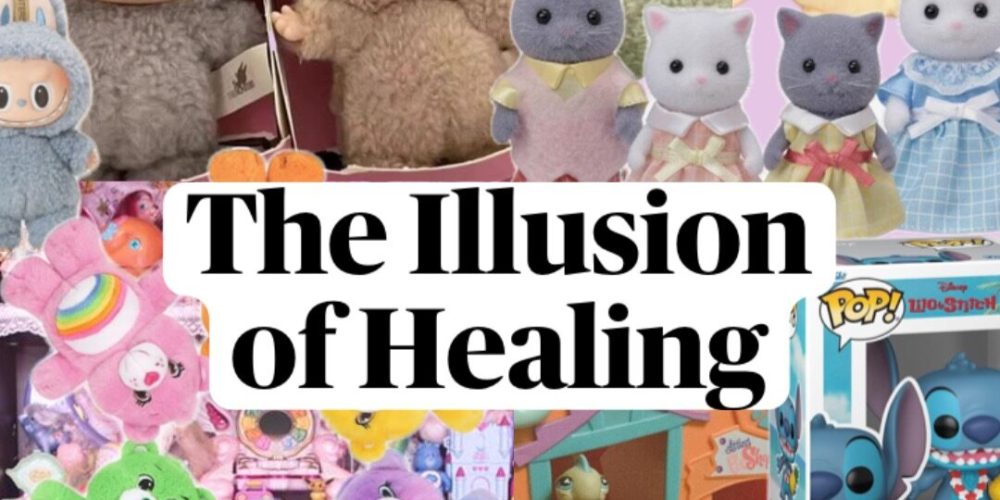
Idolatry in overconsumption
Labubus, Sanrio, Calico Critters, Mousafound Funko Pops, Pokémon cards, My Little Pony, all the way back to Furby’s, Polly Pocket, Tamagotchi, Beanie Babies, and Troll dolls…
It’s tempting to think that acquiring more and more possessions and more experiences can fill the void we often feel within ourselves. This notion is particularly prevalent when we hear the phrase “heal your inner child.” It’s ok to be a “trinket girly”, but in the attempt to heal your inner child and escape reality by buying material items like toys, fashion, beauty items, and technology, it’s all empty things that bring us temporary satisfaction that will never fill your void. Many of us were conditioned to believe that happiness could be bought, aside from the joy that comes with having our basic needs met. Overconsumption, along with the continuous cycle of chasing the next best thing, is modern-day idolatry.
Ask yourself what’s beneath this insatiable urge to keep consuming.
If collecting things tickles your brain like mine, you’ve come to the right place. However, if collecting things because it’s a trend and they come in pretty colors, so you think you need them all, and whether you have the funds to splurge
or not, it doesn’t make it any better. Why is it my business, you may ask? Well, because I used to think the same way, with the difference of only wanting items that I couldn’t acquire during my childhood because of financial reasons, and just because I’ve ALWAYS been collecting things of my interest, not just because it became a trend. But of course, how the cult of the Internet works, as they even call it “cult favorites” or “celebrities’ fav item,” and all monkey see monkey do with no true authenticity. The actual people who are unique and authentic get bullied by social media boomers and boomers who never taught their children, “If you don’t have anything, nice to say. Don’t say it at all,” also applies when you’re behind the
screen!
It’s okay to have interests. It’s okay to collect your interest. Don’t make it your mission to buy items or fight people in stores because you think you need them. They can be used as a perfectly healthy coping mechanism if they aren’t an obsession, which is the disillusionment of fulfillment. Especially in this economy, don’t be a victim of overconsumption for brands that don’t support you but love your money. Lastly, don’t make overconsumption your idol!
In society and among all the chronically online people you know, they seem to revel in this idea. Brands market their products with vibrant colors, slick advertisements, and skillful designs to distract us from the pressing issues in the world. They promise a quick fix, a shiny toy that will chase away our discomfort or loneliness, or a new phone to take sharp, lifelike pictures with a group of your so-called friends. But, much like a fleeting sugar rush, these moments of exhilaration soon fade, leaving behind an emptiness that begs to be filled once more. Instead, we end up in a cycle of disappointment, as we constantly seek the next big thing to validate our existence or our escape from it. In essence, overconsumption is a form of idolatry—putting our hope in material items rather than in the rich experiences and connections that truly nourish our souls.
How is this modern-day idolatry, and why should you care?
Whether you’re a Christian or not, everyone has been a consumer of something. You should care where your money goes. You should care about feeding your brain and your soul, and not putting your money into quick fixes. You should care because everyone deserves a fulfilling life of love and peace, and not a life of empty living.
All scripture is God-breathed and timeless! Any modern-day struggle can be found in the Bible; they are not just ancient stories, but they’re stories and characters. Yes, but to understand and connect with God, to have a relationship with Him, and to understand and grow spiritually. You don’t have to be Christian to read or agree with scripture.
✨Idolatry in the Scriptures
Here are just a few reminders that encourage us to reflect on where we place our
priorities:
– Exodus 20:3-5: “You shall have no other gods before me. You shall not
make for yourself an idol in the form of anything in heaven above or on the earth
beneath or in the water below.
– 1 John 2:15-16: “Do not love the world or anything in the world. If anyone
loves the world, love for the Father is not in them. For everything in the
world the lust of the flesh, the lust of the eyes, and the pride of life comes not
from the Father but from the world.”
– Matthew 6:19-21: “Do not store up for yourselves treasures on earth, where
moths and vermin destroy, and where thieves break in and steal. But store up for
yourselves treasures in heaven, where moths and vermin do not destroy, and where
thieves do not break in and steal. For where your treasure is, there your heart will
be also.”
These verses remind us that when we elevate possessions, trends, or experiences above our spiritual well-being, we risk turning our backs on what truly matters. Excessive focus on material possessions can lead to spiritual emptiness, as they distract us from overall mental, physical, and spiritual wellness, God, our relationships, our inner peace, and the love we share with others.
✨Healing Your Inner Child
So, how do we break this cycle of overconsumption? It all starts with addressing the inner child within us—the part that may be looking for love, acceptance, and validation in all the wrong places. Here are a few ways to nurture that relationship:
1. Self-Reflection: Take time to understand your desires and motivations.
What are you seeking when you reach for that new purchase? Is it affirmation,
happiness, or distraction? Journaling can help you unearth these feelings.
2. Cultivate Gratitude: Shift your focus from what you don’t have to what you
do have. Make a list of things you’re grateful for—often, this small exercise can
illuminate the many abundant blessings already present in your life.
3. Connect with Others: Instead of filling your time and thoughts with things,
invest in relationships that matter. Spend quality time with family, friends, or even
pets. Create meaningful memories instead of accumulating more items.
4. Practice Mindful Consumption: If you do decide to make a purchase, ask
yourself if it’s a need or a want. Is it a temporary high, or will it bring lasting value
to your life?
In a world that glorifies overconsumption, remember that our worth is not tied to what we own but to who we are and how we treat others. By looking inward and healing that void, we can break free from the clutches of this modern-day idolatry. True fulfillment comes not from material possessions but from self-understanding, authentic connections, and spiritual richness. Pivot away from the endless pursuit of more, and toward a more genuine and fulfilling existence that you can only find in God and Him alone!